Shoulder Arthroscopy Recovery Timeline: What Actually Happens Week by Week
Surgery Center Directory Team
March 9, 2026
Shoulder arthroscopy is one of the top procedures performed at ambulatory surgery centers, commonly used to address rotator cuff tears, labral tears, impingement, and shoulder instability through small incisions rather than open surgery. Compared to knee arthroscopy, shoulder procedures tend to involve a longer and more restricted early recovery, largely because the shoulder is a less inherently stable joint and repaired tissue needs more protected time to heal before it's stressed again.
As with any arthroscopic procedure, the specific recovery depends heavily on what was actually repaired. A diagnostic scope with minor debridement recovers much faster than a rotator cuff repair. The timeline below reflects a moderate rotator cuff repair, one of the more common reasons for the procedure, with notes on how simpler cases differ.
Days 1 to 7: the sling becomes the main event
Expect to wear a sling essentially full-time, including while sleeping, for the first several weeks — this is one of the more disruptive parts of shoulder recovery that surprises people who assumed it would be similar to a knee procedure. The point of the sling isn't just comfort; it's protecting the repair from movement while the tissue begins to heal, so wearing it consistently in the early days matters more than most patients initially expect.
Pain and swelling are typically worse in the first few days than many patients anticipate, particularly at night when there's no distraction and shoulder positioning is harder to control while sleeping. Sleeping in a recliner or propped up with pillows in bed is a common and often necessary adjustment for the first couple of weeks.
Weeks 2 to 4: passive motion only
Physical therapy typically starts within the first couple of weeks, but for a repair, it begins with passive range of motion — the therapist or a machine moves the arm, not the patient's own muscles — to prevent stiffness without stressing the repair. Trying to actively use the arm before it's cleared, even for small everyday tasks, is one of the more common ways patients set back their own recovery in this window.
The sling generally continues through this period for repairs, though the exact timeline is set by the surgeon based on what was repaired and how it looked during surgery — this isn't a fixed universal number, and it's worth confirming your specific timeline rather than assuming based on a friend's experience with a different procedure.
Weeks 4 to 8: coming out of the sling, active motion begins
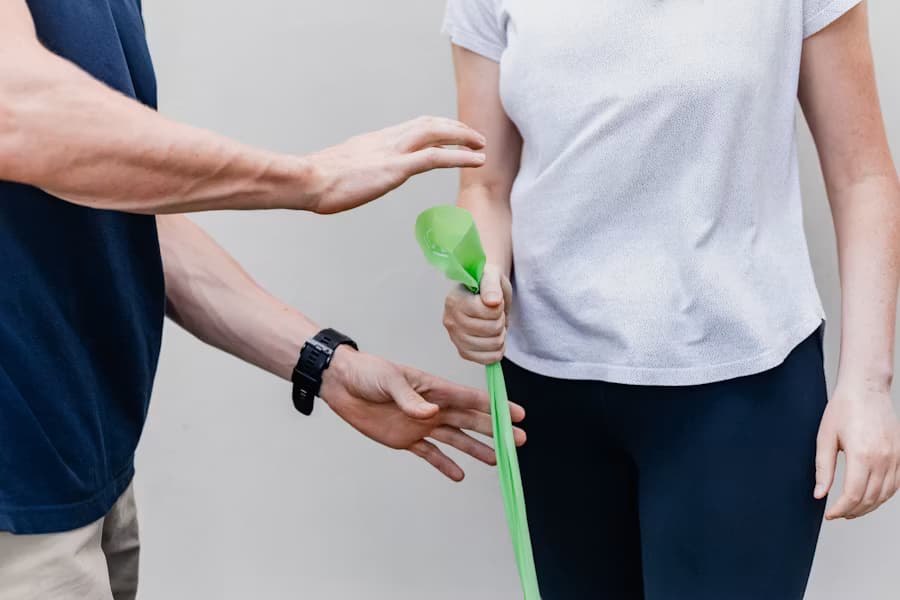
This is typically when the sling is discontinued for most repairs and physical therapy shifts toward active-assisted and then active range of motion — the patient begins doing more of the movement themselves rather than relying entirely on the therapist. Simple activities like eating, typing, and light desk work usually become manageable in this window, though overhead reaching and lifting typically remain restricted.
Stiffness is common and expected during this transition, and physical therapy attendance matters more here than almost any other point in recovery — this is where a meaningful amount of the eventual range of motion is regained, and skipped sessions are harder to make up for later than people expect.
Months 2 to 4: strengthening
Once adequate range of motion is restored, physical therapy shifts to strengthening the rotator cuff and surrounding shoulder muscles. This phase is typically slower and more gradual than patients expect, since loading a healing tendon too aggressively too early is a real risk to the repair itself.
Return to desk work often happens well before this phase is complete, sometimes as early as 4 to 6 weeks depending on the job. Return to activities involving overhead lifting, throwing, or heavy use of the arm typically takes considerably longer, often not cleared until 4 to 6 months for a repair.
Months 4 to 6 and beyond: return to full activity
Full strength and confidence in the shoulder, particularly for overhead sports or physically demanding work, commonly takes 4 to 6 months for a rotator cuff repair, and can extend beyond that for larger tears. This is meaningfully longer than most patients initially expect going into surgery, and it's worth knowing that timeline upfront rather than being caught off guard by it partway through recovery.
For a simpler diagnostic or debridement procedure without a repair, this entire timeline compresses significantly — often back to most normal activity within 6 to 8 weeks. The difference between these two recovery paths is large enough that it's worth confirming directly with the surgeon which category applies before setting expectations.
What to flag rather than wait out
Fever, increasing redness or drainage at incision sites, or a sudden increase in pain after a period of steady improvement are not typical parts of recovery and are worth a call rather than assuming it will resolve on its own. Numbness or tingling down the arm that's new or worsening, rather than the mild post-surgical soreness expected early on, is also worth reporting rather than monitoring independently.
Related Resources
Looking for a surgery center near you?
Search 5,700+ Medicare-certified ASCs and compare CAHPS scores, accreditation, and patient reviews.