Lumbar Epidural Steroid Injections: What to Expect at Your Appointment
Surgery Center Directory Team
February 21, 2026
Lumbar epidural steroid injections are among the most frequently performed procedures at ambulatory surgery centers, typically used to treat pain from a herniated disc, spinal stenosis, or sciatica by delivering anti-inflammatory medication directly to the area around the irritated spinal nerve. Despite how common the procedure is, most patients arrive with only a vague sense of what will actually happen, largely because it's often described in a brief conversation rather than walked through in detail.
What the injection is actually treating
The epidural space is the area surrounding the spinal cord and nerve roots, outside the protective dura layer. When a disc herniates or the spinal canal narrows, it can irritate or compress a nerve root, causing inflammation and pain that often radiates down a leg (sciatica) or arm depending on the level involved. The injection delivers a corticosteroid, usually combined with a local anesthetic, directly into that space to reduce inflammation at the source rather than treating pain systemically the way an oral medication would.
It's a treatment for inflammation and pain, not a structural fix. It doesn't repair a herniated disc or reverse stenosis. For many patients it provides meaningful relief that lasts weeks to several months, which can be enough time for the underlying issue to improve on its own or make physical therapy more tolerable and effective.
Before the appointment
Blood thinners are typically the main medication concern — aspirin, clopidogrel, warfarin, and similar medications often need to be paused for a specific window beforehand, determined by the prescribing physician, not guessed at independently. This is a real safety issue given the injection is near the spinal canal, so facilities are typically strict about confirming this beforehand.
Diabetic patients should expect a possible temporary rise in blood sugar for a few days after the injection, since corticosteroids affect glucose metabolism. This is worth discussing with whoever manages your diabetes care beforehand so you know what monitoring or adjustment to expect.
Most facilities recommend eating a light meal beforehand rather than fasting completely, since sedation for this procedure — if used at all — is typically minimal. Confirm your specific facility's instructions, since this varies more than for procedures requiring deeper sedation.
What happens during the procedure
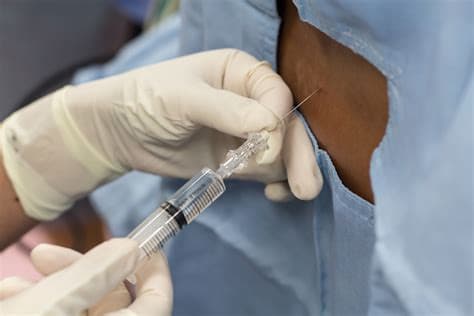
You'll typically lie face down on a procedure table. The skin over the injection site is cleaned and numbed with local anesthetic first, so the sensation is more pressure than sharp pain once the epidural needle itself is placed. Fluoroscopy — real-time X-ray imaging — is used throughout to guide the needle precisely to the correct level and confirm placement before the medication is delivered, which is standard practice and worth confirming your facility uses rather than a blind, non-imaged approach.
The injection itself takes only a few minutes once the needle is correctly positioned; the appointment length is mostly setup, positioning, and monitoring rather than the injection itself. Most patients describe brief pressure or a dull ache during needle placement rather than significant pain.
Immediately afterward
You'll typically be monitored for 15 to 30 minutes afterward before discharge. Some facilities use light sedation, in which case a driver is required the same way it would be for any sedated procedure — confirm this in advance rather than assuming.
Temporary numbness, weakness, or an odd sensation in the legs can occur for a few hours if local anesthetic was used near a nerve root, and this resolves on its own. It's not a sign of nerve damage, but it does mean avoiding driving or strenuous activity for the rest of that day regardless of whether sedation was used.
What relief looks like, and when
Pain relief isn't always immediate. Some patients notice improvement within a day or two as the steroid takes effect, which can take up to a week to reach full effect. It's common for pain to feel temporarily better right after the injection due to the local anesthetic, then return somewhat until the steroid itself takes hold days later — this dip is expected and not a sign the injection failed.
A single injection doesn't work for everyone, and it's common for a treatment plan to include up to three injections spaced several weeks apart if partial relief is achieved. If there's no improvement at all after the first injection, that's worth a direct conversation with the physician about whether to repeat it or pursue a different approach, rather than continuing the same treatment by default.
When to call rather than wait
Fever, significant increasing pain at the injection site, new or worsening weakness, or loss of bladder or bowel control after the appointment are not expected parts of recovery and warrant a same-day call to the physician's office. These are uncommon, but they're the specific symptoms worth knowing in advance rather than looking up while worried.
Related Resources
Looking for a surgery center near you?
Search 5,700+ Medicare-certified ASCs and compare CAHPS scores, accreditation, and patient reviews.