Knee Replacement Surgery: What to Expect at an ASC
Surgery Center Directory Team
April 19, 2026
Total knee replacement (knee arthroplasty) has traditionally been a hospital procedure, but that's changed meaningfully over the past several years. Medicare added total knee replacement to the list of procedures approved for ambulatory surgery centers in 2020, and a growing share of eligible patients now have the procedure done at an ASC with same-day or next-morning discharge rather than a multi-day hospital stay. It's a different procedure from knee arthroscopy — arthroscopy repairs or cleans up existing joint structures through small incisions, while replacement removes damaged joint surfaces entirely and replaces them with an artificial implant. The recovery is longer and more structured as a result.
Who is actually a candidate for ASC knee replacement
Not every patient who needs a knee replacement is a good candidate for having it done at an ASC rather than a hospital. Generally, candidates are in reasonably good overall health, without significant heart or lung disease, uncontrolled diabetes, or other conditions that meaningfully raise anesthesia or recovery risk. Age alone isn't usually the deciding factor — overall health and having reliable support at home for the first days after surgery matter more.
This is a conversation to have directly with the surgeon, not something to assume based on age or general health. A surgeon who recommends a hospital setting instead of an ASC for a specific patient is making that call based on real risk factors, not caution for its own sake.
The procedure itself
During surgery, the damaged cartilage and a thin layer of bone at the end of the femur and top of the tibia are removed and replaced with metal and plastic implant components that recreate the joint surface. The procedure typically takes about 1 to 2 hours. Anesthesia is usually a combination of spinal or regional nerve block anesthesia with sedation, which tends to result in less nausea and an easier early recovery than general anesthesia alone, though the specific approach depends on the anesthesiologist and patient factors.
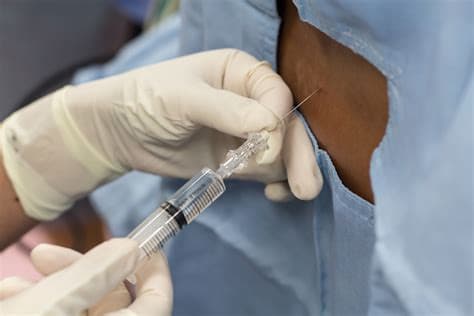
A nerve block is commonly used to manage pain in the joint for the first 12 to 24 hours after surgery, which is part of why same-day or next-morning discharge from an ASC has become more feasible — pain control in the immediate post-operative window is significantly better than it was with older anesthesia approaches.
The first 24 hours
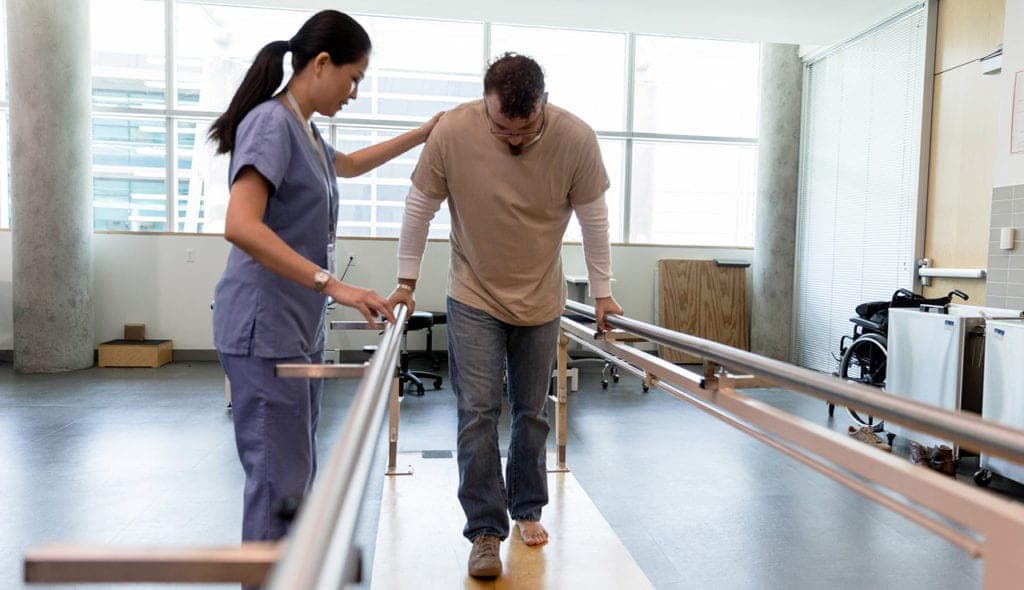
Most patients are up and walking with a walker, often with physical therapy assistance, within hours of surgery — this early mobilization is a deliberate part of modern recovery protocols, not something to be nervous about. Some ASCs discharge the same day if pain is controlled and the patient can safely walk and use the bathroom independently with assistance; others plan for a short overnight stay at an affiliated facility. Confirm which model your specific ASC uses, since this affects planning for a ride home and who's available to help once you're there.
A responsible adult needs to be available for at least the first 24 to 48 hours at home, not just for the ride from the facility. Getting up from a chair, navigating stairs, and basic daily tasks are genuinely difficult in the first day or two, and having help isn't optional.
Weeks 1 to 2: the physical therapy really starts here
Physical therapy, often starting the day of or the day after surgery, is the single biggest factor in how well and how quickly recovery goes. Home health physical therapy is common in the first couple of weeks, transitioning to outpatient PT visits once mobility improves enough to travel there safely. Skipping or minimizing PT in this window is one of the more common reasons patients end up with a stiffer, slower recovery than necessary.
A walker is typically used for the first 1 to 3 weeks, transitioning to a cane as strength and balance improve. Swelling and bruising are significant in this window and can extend down into the lower leg and ankle — this is normal and expected, not a sign of a complication, though it should be monitored per the specific warning signs below.
Weeks 3 to 6: increasing independence
Most patients transition off the walker to a cane, and eventually off assistive devices entirely, somewhere in this window, though the exact timing varies by individual. Driving typically becomes possible again once off narcotic pain medication and once the operated leg has regained enough strength and reaction time for safe braking — this is a functional milestone, not a fixed calendar date, and should be confirmed with the surgeon rather than assumed.
Desk work is often possible within 3 to 6 weeks depending on commute and how sedentary the job is. Physically demanding jobs typically require significantly longer, sometimes 3 months or more.
Months 2 to 6: full recovery
Continued improvement in strength, range of motion, and endurance typically continues for 3 to 6 months, with some patients seeing gradual improvement for up to a year. This longer tail surprises a lot of patients who expect to feel “back to normal” by 6 weeks — meaningful recovery happens by then, but full recovery is a longer process. Most patients report significant pain relief and improved function well before full recovery is complete, which is part of why the procedure has such high patient satisfaction despite the length of the process.
What to flag rather than assume is normal
Increasing redness, warmth, or drainage at the incision site, a fever, or calf pain and swelling in one leg more than the other (a possible sign of blood clot) are not expected parts of recovery and warrant an immediate call rather than waiting for a scheduled follow-up. Sudden shortness of breath or chest pain — a possible sign of a clot that has traveled to the lungs — is a medical emergency requiring immediate care, not a wait-and-see situation.
Related Resources
Looking for a surgery center near you?
Search 5,700+ Medicare-certified ASCs and compare CAHPS scores, accreditation, and patient reviews.