Knee Arthroscopy Recovery Timeline: Week by Week
Surgery Center Directory Team
February 25, 2026
Knee arthroscopy is one of the most common orthopedic procedures performed at ambulatory surgery centers, used to diagnose and treat issues like meniscal tears, ACL or PCL injuries, and general joint inflammation through a few small incisions rather than an open surgical approach. The single biggest factor in recovery time isn't the surgery being arthroscopic — it's what was actually repaired. A simple meniscus trim recovers very differently than an ACL reconstruction, even though both are called "knee arthroscopy."
The timeline below reflects a general meniscal debridement or cleanup procedure, which is the most common version. If your procedure involved a ligament reconstruction or meniscal repair with sutures rather than trimming, expect a substantially longer and more restricted timeline — ask your surgeon specifically which category your procedure falls into, since the generic advice below won't apply the same way.
Days 1 to 3: swelling and rest
Expect swelling, bruising, and soreness around the incision sites. Elevation and icing 20 minutes at a time, several times a day, make a real difference here and are worth doing consistently rather than only when pain is noticeable. Most facilities send patients home with a compression wrap and instructions to keep the leg elevated above heart level as much as possible for the first 48 to 72 hours.
Weight-bearing status depends entirely on what was done — a simple cleanup procedure often allows weight-bearing as tolerated almost immediately, sometimes with crutches for balance rather than necessity, while a meniscal repair typically requires a period of limited or no weight-bearing to protect the healing tissue. This distinction matters enough that it's worth confirming explicitly before leaving the facility, not assuming based on what you've read generally.
Days 4 to 10: early mobility
Swelling begins to decrease, and most patients transition off narcotic pain medication toward over-the-counter options during this window, though this varies by individual pain tolerance and procedure extent. Physical therapy often starts within the first week for procedures without a repair, focused on regaining range of motion and reducing swelling rather than strengthening yet.
Incision sites should be watched for the standard warning signs — increasing redness, warmth, spreading swelling, or discharge — since infection risk, while low, is highest in this window. A low-grade fever in the first day or two can be a normal inflammatory response to surgery, but a fever developing later in this period, or one that's high, is worth a call.
Weeks 2 to 4: building strength
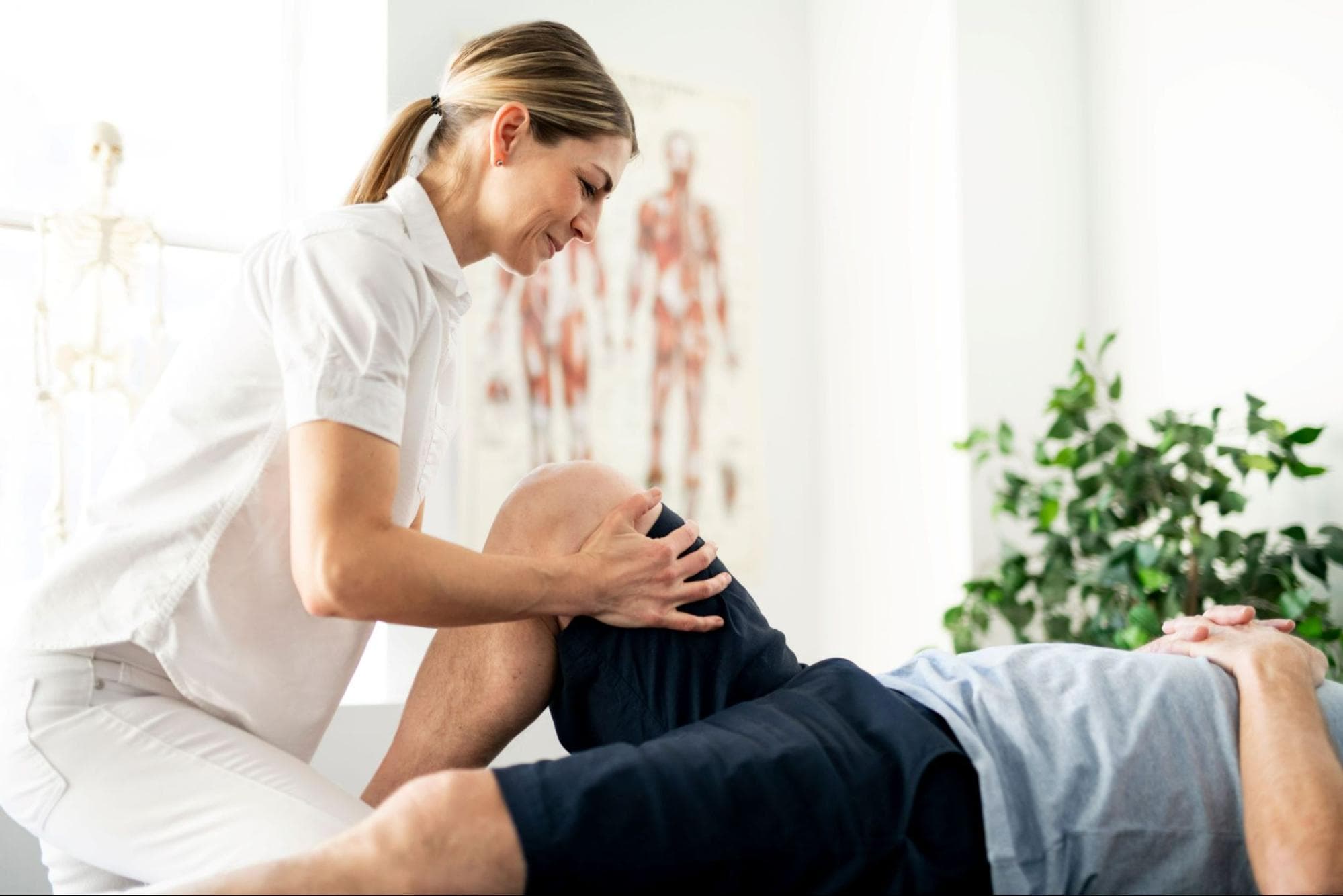
This is typically when physical therapy shifts from range-of-motion work to active strengthening, particularly of the quadriceps, which tend to weaken quickly after any knee surgery due to reduced use. Many patients return to sedentary desk work within this window if swelling and pain are reasonably controlled, though jobs requiring standing, walking, or physical activity usually need longer.
Driving typically becomes reasonable again once off narcotic pain medication and once the operated leg (particularly the right leg, for brake control) has regained enough strength and range of motion to react quickly and safely — this is a functional readiness question, not a fixed date, and worth discussing directly with the surgeon rather than assuming a specific week.
Weeks 4 to 8: return toward normal activity
For a straightforward meniscal cleanup, many patients are close to their pre-surgery activity level by 6 to 8 weeks, though full strength and confidence in the joint, particularly for pivoting or impact sports, often takes longer. For a meniscal repair or ligament reconstruction, this window looks very different — often still early-to-mid rehabilitation rather than a return to activity, sometimes extending to 6 months or more before full sport return for an ACL reconstruction specifically.
Swelling that comes and goes with activity is common well into this period and isn't necessarily a setback on its own. Swelling that's significantly worse than a prior day, or accompanied by new pain, is worth mentioning at a follow-up rather than waiting it out.
What actually determines your timeline
Beyond the type of procedure, age, baseline fitness, how closely physical therapy instructions are followed, and whether swelling is managed aggressively in the early days all meaningfully affect how fast recovery goes. Two patients with the identical procedure can have noticeably different timelines based on these factors, which is why generic recovery calendars are only a rough guide rather than a guarantee.
The most reliable way to know where you actually stand is the follow-up appointment schedule your surgeon sets, not a calendar date. Missing or delaying follow-up appointments is one of the more common reasons recovery stalls without anyone noticing early enough to address it.
Related Resources
Looking for a surgery center near you?
Search 5,700+ Medicare-certified ASCs and compare CAHPS scores, accreditation, and patient reviews.