Alternatives to Rotator Cuff and Shoulder Surgery
Surgery Center Directory Team
May 14, 2026
Shoulder pain from a rotator cuff tear, impingement, or general degeneration doesn't automatically mean surgery is the next step. The right approach depends heavily on the type and size of the problem — a small, partial rotator cuff tear is a very different situation than a large, full-thickness tear, and the non-surgical options that work well for one may do little for the other.
Physical therapy: the first step for most shoulder problems
For impingement, tendinitis, and many partial rotator cuff tears, a structured physical therapy program focused on strengthening the surrounding shoulder muscles and correcting movement mechanics is genuinely effective and is standard as a first-line approach before surgery is considered. This typically takes 6 to 12 weeks of consistent effort to fairly evaluate whether it's working — a couple of sessions isn't a real trial of physical therapy.
For a full-thickness rotator cuff tear, physical therapy can still meaningfully improve function and reduce pain for some patients, but it won't heal the actual tear, since torn tendon tissue generally doesn't repair itself without surgical intervention. Whether that matters depends on the patient's activity goals and how much the tear is actually limiting function.
Corticosteroid injections
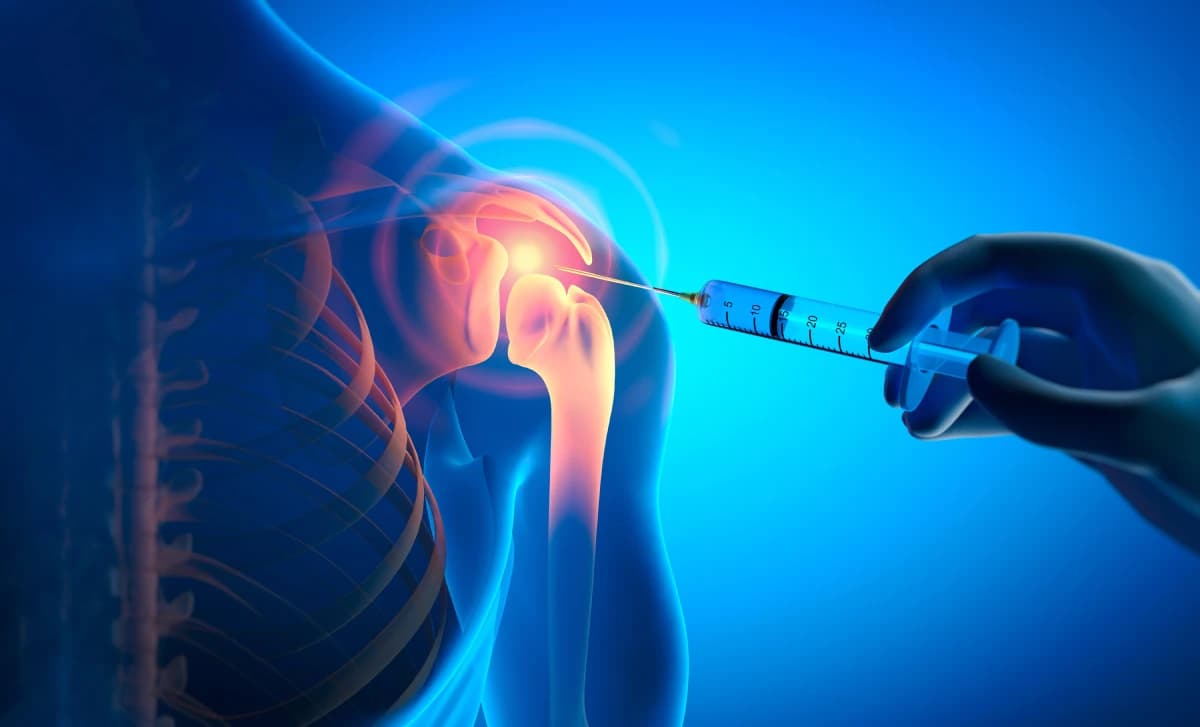
A cortisone injection into the shoulder joint or subacromial space can meaningfully reduce pain and inflammation, often making physical therapy more tolerable and effective by reducing pain enough to participate fully in strengthening exercises. As with other joints, relief is typically temporary, and frequent repeated injections are generally avoided due to some evidence of tendon weakening with overuse.
PRP and stem cell therapy for the shoulder
PRP has shown some benefit for shoulder tendinitis and partial rotator cuff tears in various studies, though the evidence base for the shoulder specifically is somewhat less robust than for knee osteoarthritis. It is generally not considered an effective treatment for healing a full-thickness rotator cuff tear — a completely torn tendon has a physical gap that biologic injections alone don't reliably close.
Stem cell and BMAC therapy for the shoulder follows a similar pattern: more promising for partial tears and tendinopathy, with weaker evidence for repairing complete tears. As with knee and hip applications, these treatments are typically cash-pay and not covered by insurance.
When surgery is genuinely the better option
A large or full-thickness rotator cuff tear, particularly in an active or younger patient, generally has a better long-term outcome with surgical repair than with non-surgical management, since the tendon won't heal the gap on its own and the tear can enlarge over time if left alone. Significant shoulder instability with repeated dislocations is another situation where non-surgical options tend to have limited long-term success and surgery is more often the more effective path.
The size and type of tear — confirmed by MRI, not just symptoms — is the key piece of information for this decision, and it's worth having that imaging and a direct conversation with an orthopedic surgeon before committing to months of non-surgical treatment that may not be appropriate for the specific tear involved.
Bracing and activity modification
For shoulder instability or milder impingement, a period of activity modification — avoiding overhead lifting, throwing, or reaching motions that provoke symptoms — combined with a sling or brace for comfort in the acute phase can allow inflammation to settle before starting a strengthening program. This isn't a long-term fix on its own; prolonged immobilization without follow-up strengthening tends to lead to stiffness and weakness that can make the underlying problem worse. It works best as a short bridge into physical therapy, not a substitute for it.
What a realistic non-surgical trial actually looks like
A genuine trial of conservative treatment for a partial tear or impingement typically means 6 to 12 weeks of consistent physical therapy, reassessed with a follow-up exam and sometimes repeat imaging, rather than a single round of exercises tried for a couple of weeks and abandoned. Patients who stop attending physical therapy once the initial pain improves — without finishing the strengthening phase — are more likely to have symptoms return, which can look like a failed non-surgical trial when it was really an incomplete one. If you're going the non-surgical route, finishing the program before deciding whether it worked matters as much as starting it.
Related Resources
Looking for a surgery center near you?
Search 5,700+ Medicare-certified ASCs and compare CAHPS scores, accreditation, and patient reviews.